
The Apprentice's Ego: Sometimes the Lesson is What Not to Do
/ 4 min read
Table of Contents
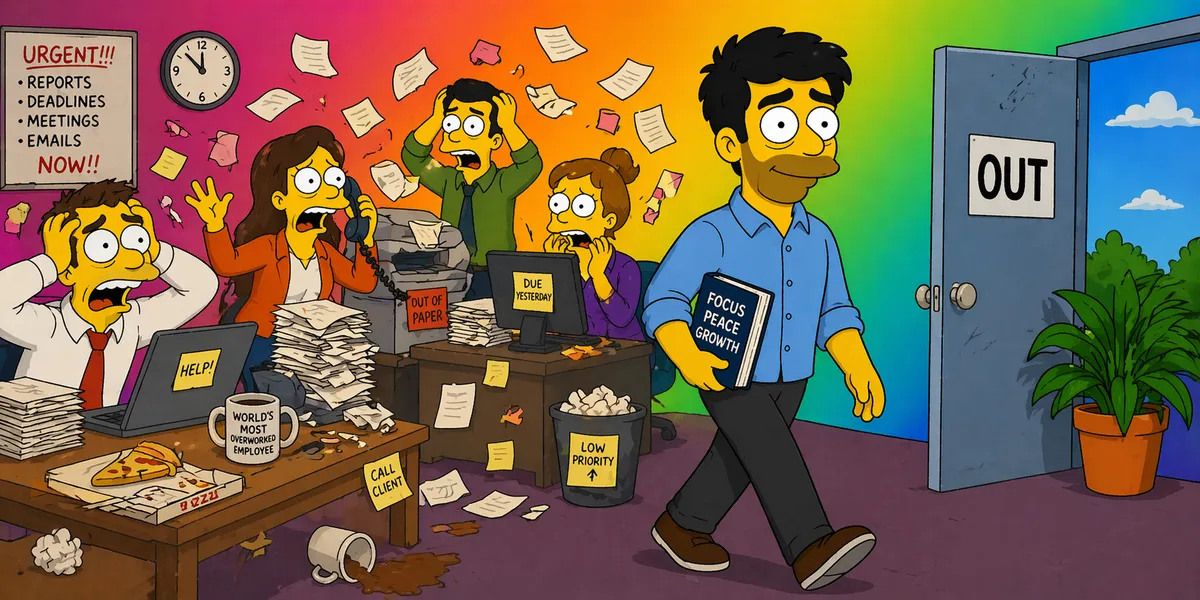
I walked into my first marketing agency expecting deadlines, research decks, and people who cared deeply about campaign performance.
I found people arriving at 2pm. This was late 2022. My employer — an IT solutions company — had placed me inside a digital marketing agency they’d hired to handle their online presence. My instructions came from both. My salary came from one. My education, as it turned out, came from neither.
It came from watching.
The Brief That Never Existed
Here’s what nobody tells you about agencies. The ones that struggle don’t fail because of bad people. They fail because of bad systems. No clear briefs. No research foundation. No defined goals attached to actual business outcomes.
Every campaign started with a client request and ended with a deliverable. What happened in between — the competitor analysis, the audience research, the strategic thinking — was largely optional. Or at least it felt that way from where I was sitting.
Work arrived on due dates. Sometimes after. Client feedback was absorbed and acted on immediately without question — not because the client was always right but because nobody had done enough research to push back confidently.
Philip Kotler spent decades writing about this. Marketing without research isn’t marketing. It’s decoration.
The Awkward Position Nobody Prepares You For
Here’s what made my situation genuinely strange.
My employer was the agency’s client. I was my employer’s person on the ground. Which meant I was simultaneously the agency’s colleague and the client’s representative. I watched the work get made in the morning and watched it get reviewed by my actual employer in the afternoon.
Most people spend years before they see both sides of that table. I saw them at the same time before I fully understood what I was looking at.
What I understood eventually was this — the gap between what agencies promise and what they deliver isn’t usually about talent. It’s about preparation. Agencies that skip the research phase aren’t lazy. They’re just optimizing for speed over substance. And clients who don’t demand research upfront get exactly what they pay for.
That observation has shaped every client conversation I’ve had since.
What I Wish Someone Had Told Me
The books are clear on this. In Thinking Fast and Slow Daniel Kahneman describes two modes of thinking — fast, instinctive, and emotional versus slow, deliberate, and logical. Most rushed agency work lives entirely in fast mode. It feels productive. It looks busy. It rarely moves the needle.
Byron Sharp’s How Brands Grow makes the same argument differently. Growth isn’t about creative instinct. It’s about consistent, research-backed decisions made over time. No amount of hard work compensates for a strategy built on assumptions instead of data.
I watched money get burned on campaigns that were never going to work — not because the execution was poor but because nobody had asked the right questions before the work started.
That’s not a people problem. That’s a process problem.
The Thing I Actually Learned
Here’s the part I didn’t expect.
Despite everything — the late arrivals, the rushed deliverables, the absent briefs — I learned more technical marketing here than anywhere else in that period.
Not from the agency’s systems. From its people.
I taught myself web development — not to build websites but to understand them. Enough to fix small things on a WordPress site without calling a developer. Enough to understand why a page was loading slowly or why a layout was breaking on mobile.
I learned to build HTML email templates from scratch. I got comfortable inside Mailchimp and MooSend — not just clicking buttons but understanding the logic underneath. List segmentation. Delivery timing. Bounce management.
Nobody assigned me these things. I picked them up because I was curious and because the environment, chaotic as it was, had people who knew things worth knowing.
That’s the thing about imperfect environments. They force self-directed learning in a way that structured ones never do. When nobody hands you a curriculum you build your own.
The Apprentice’s Real Education
I went in expecting to learn from professionals doing things right.
The ego check — and it was a genuine one — was realizing that watching people do things wrong is an equally valid education. Maybe more valuable because the lessons stick differently. You don’t just know what works. You know exactly why the alternative doesn’t.
Smart work beats hard work. Research beats effort. And sometimes the most useful thing a chaotic environment teaches you is a precise, detailed picture of the professional you refuse to become.
I left with technical skills I hadn’t expected. A strategic perspective I couldn’t have bought. And a very clear answer to the question every junior professional eventually faces — what kind of work do I actually want to do and what kind of place do I want to do it in.
The agency ran on vibes. I ran on curiosity. Curiosity compounded. Vibes didn’t.