
Cementing My Future
/ 8 min read
Table of Contents
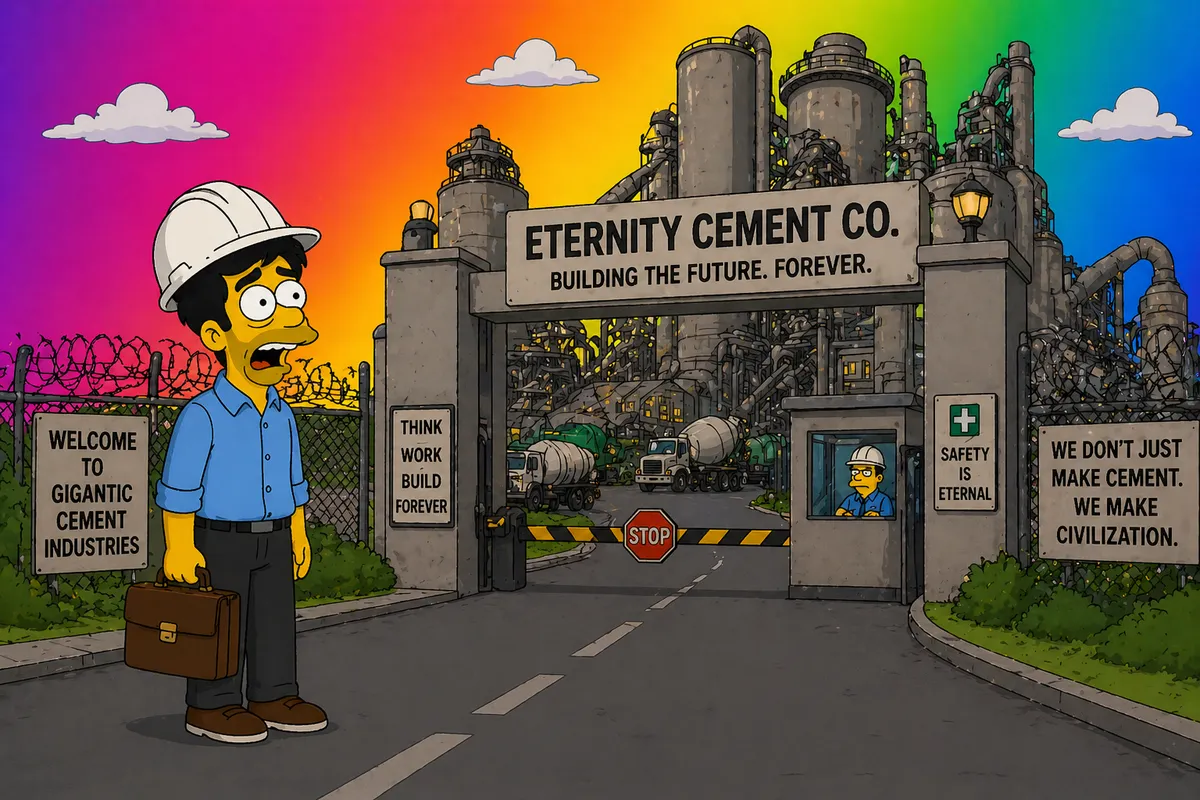
I am standing on a construction site in the middle of a working day explaining to a painter why everything he thinks he knows about this product is wrong.
He is skeptical. He has heard the criticism. The product wears off with water. Doesn’t hold. Not worth recommending to his clients.
I don’t argue. I apply a sample on his wall and tell him to watch. This moment — repeated across dozens of sites, dozens of conversations, dozens of people with genuine doubts — turns out to be the most complete marketing education of my life. Not the MBA. Not the agencies. Not the email campaigns or the SEO audits or the keyword clusters.
This. A sample on a wall. A person watching. Trust being built in real time.
Welcome to the Big League
Maple Leaf operates at a scale that is difficult to describe until you are inside it. Global level operations. People from the most prestigious universities in Pakistan. A culture actively and deliberately evolving — not because it has to but because leadership genuinely believes it should.
What strikes me most in the early weeks is not the scale but the clarity of purpose at the top and the gap between that clarity and how it translates on the ground. Not a crisis. An opportunity. A company this size with this much intention needs people who can bridge vision and execution.
That gap is where my role lives.
When Digital Doesn’t Work
Our COO puts it simply in one of our early sessions.
Cement is push marketing. Not digital. Not social media campaigns or SEO articles or email sequences.
At first this feels like a limitation. Coming from agencies and digital operations, the instinct is to ask — why aren’t we doing more online? Why aren’t we building funnels and running campaigns and measuring click through rates?
Then you understand the product.
Most people build a home exactly once in their lifetime. Commercial clients — contractors, builders, developers — work with construction materials for decades but make decisions based on site performance not online reviews. The decision is never made on a screen. It is made on a site, with a product demonstrated in front of them, by a person they have decided to trust.
This is the fundamental rule of industrial and construction marketing that no digital playbook covers — some products demand presence not campaigns. When the stakes are high, the purchase is infrequent, and the consequences last decades, people need to see and touch and test before they commit.
Understanding which type of market you are in — presence based or campaign based — is the first decision every marketer needs to make. Getting it wrong wastes budgets, frustrates teams, and produces results that look busy but move nothing.
Know Your Buyer — All Five of Them
Here is something nobody tells you about industrial marketing. You are never selling to one person. You are selling to an ecosystem.
In construction marketing alone I navigate five distinct buyer types simultaneously — each with completely different motivations, concerns, and decision making triggers.
The house owner is not making a hasty decision. This is likely the most significant financial commitment of their life. They are not primarily concerned about price — they are concerned about trust and long term value. The product removes the need for primer, reduces long term maintenance costs, and pays for itself over time. Your job is to slow down, listen to their anxiety, and help them see past the upfront cost to the decade of savings behind it.
The contractor and builder think differently. Cost and availability dominate their decision making. They are running projects with tight margins and tight timelines. Your conversation with them is about reliability and value per application not lifestyle or long term savings.
The painter is often the most underestimated stakeholder in this ecosystem. They are frequently the decision influencer or outright decision maker on a site. What motivates them is ease of application and incentive. Understanding the token card reward system, explaining it clearly, and making sure painters feel genuinely valued within it is as important as any product demonstration.
The architect and interior designer are result oriented. They care about finish quality, texture options, and aesthetic outcome. Your conversation with them is about what the end result looks like not what the product costs.
The channel manager and distributor sit at the center of the entire system. Availability, pricing, and margin are their language. Without them nothing reaches anyone else.
Five different conversations. Five different motivations. One product. The marketer who tries to have the same conversation with all five will fail with most of them.
How to Fight Misinformation Without Advertising
Every strong product has competitors who prefer it didn’t exist.
The criticism circulating in the market — that the product wears off with water, that it doesn’t hold — sounds damaging until you examine it honestly. Everything wears under sufficient negative pressure. Cities flood. Walls face water. The question is never whether a material can fail under extreme conditions. The question is whether it performs better than the alternative.
The answer, demonstrated on site, is consistently yes.
But here is the lesson that matters. You cannot fight this kind of misinformation with advertising. You cannot run a campaign that convinces a skeptical painter. You cannot post content that changes a contractor’s mind.
You have to show up. Apply the sample. Address the allegation directly and specifically. Let the product respond to the criticism in real time in front of the person who doubts it.
This is presence over argument. Demonstration over claim. It is slower than advertising. It does not scale the way a campaign scales. But in a high stakes market where trust is the primary currency it is the only thing that actually works.
The Stakeholder Ecosystem
The coordination required in this role is more complex than anything I have managed before.
Painters for sampling. Distributors. Channel managers. Internal reporting chains from sales officer to assistant manager to deputy manager to regional head to national head to functional head. Every level has different priorities and different definitions of success.
What I learn about stakeholder management at this scale is something the MBA described theoretically but never made visceral. You are the face of the company in every interaction. When you show up to a site you are not representing yourself. You are representing every promise the company has ever made to that contractor, that painter, that house owner.
That weight — properly felt — changes how you prepare, how you listen, and how seriously you take the follow up. Because the follow up is where most relationships are won or lost. Not the first meeting. The third. The fifth. The one where you remember what they said last time and show up having already thought about their specific problem.
What the MBA Actually Taught Me Here
I have an MBA in Marketing. It helped — but not in the way I expected.
The four Ps are not theoretical here. Price, product, place, promotion — seeing them operate simultaneously in a high stakes industrial environment at genuine scale is a different education entirely. The bookish concepts work. They just work differently than the books describe.
What the MBA actually gave me was a framework for seeing — the ability to look at a market, a product, a customer conversation and ask the right structural questions. Why is this not working? What is the real motivation here? Where is the gap between what we are saying and what they are hearing?
You learn the concepts. You forget them in the grind of daily work. Then one day on a construction site you realize you are running a live stakeholder analysis without thinking about it. That is when the MBA pays off. Not in the classroom. Not in the case study. In the moment when the frameworks become instinct.
What This Industry Is Teaching Me
I am still here. Still learning. Still standing on construction sites demonstrating products to people building something permanent.
What industrial marketing teaches that no agency ever could is this — marketing at its most fundamental is not about visibility. It is about trust built through presence, demonstrated through honesty, and sustained through showing up consistently in the moments that actually matter.
Five buyer types. One product. Infinite conversations.
The cement holds the building together.
The relationship holds everything else.
Got questions about construction marketing, product demonstrations, or just want to talk about why cement is more interesting than you think?
Abdul Hadi — Assistant Manager Marketing, Maple Leaf Cement 📧 abdul.hadi@kmlg.com 📞 0316 426 6524
Drop an email, make a call, or do both. I don’t bite.