
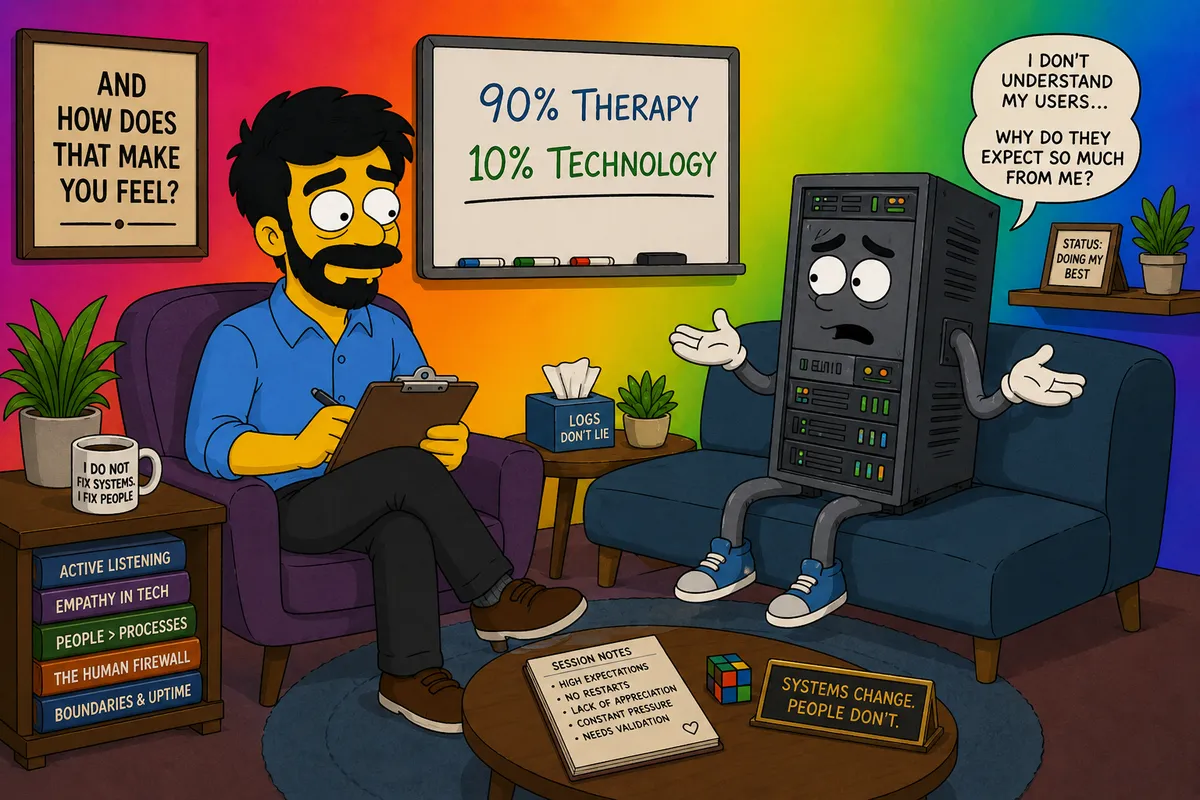
Change Management is 90% Therapy, 10% Technology
/ 7 min read
Table of Contents
I once asked twenty people to write down a problem.
Not a business problem. Not a strategic challenge. Just — what is actually not working right now? What is slowing you down, frustrating you, making your Tuesday harder than it needs to be?
Then I asked them to sit with those problems for a week and come back with solutions. Not grand solutions. Practical ones. Things that could actually be done.
Then we read them out loud. One by one. To the whole room. And we voted.
The ideas that survived that room — the ones that got the most hands in the air — became the work we did next. Not the ideas the loudest person had. Not the ones the most senior person preferred. The ones the room believed in.
I did not know it then, but I was running a demand intake process. The same process that Strategic Portfolio Management formalizes, automates, and makes visible at an organizational scale on ServiceNow.
The methodology was not new. The human instinct behind it was not new either. What SPM taught me was that the best organizations have always known this — they just needed a platform to make it stick.
What I Thought SPM Was
I came into this certification with a clearer starting point than most.
I have an MBA. Portfolio management was not a foreign concept — I understood it in the finance and project sense. Cost from initiation to completion. Resource allocation. Risk calculation. Budget control across multiple initiatives running simultaneously.
What I did not fully understand was the strategic layer. The part where individual projects stop being individual projects and become a coordinated portfolio of organizational bets. Where leadership is not just asking whether this project is on track but whether we are working on the right things at all — and whether we have the capacity to actually deliver them.
That distinction — between managing projects and managing strategy — is what SPM lives inside. And once you see it, you cannot unsee it.
For someone with my background it felt like home. The MBA trains you to think in systems, to find the loopholes in a pipeline before they become crises, to constantly ask whether the work being done is connected to the outcome being chased. SPM rewards exactly that instinct.
The Feature That Changed How I Think About People
Most people, when they talk about SPM, talk about project portfolios and demand management and roadmaps.
I want to talk about resource management. Because it is the feature that is most technically simple and most humanly complex at the same time.
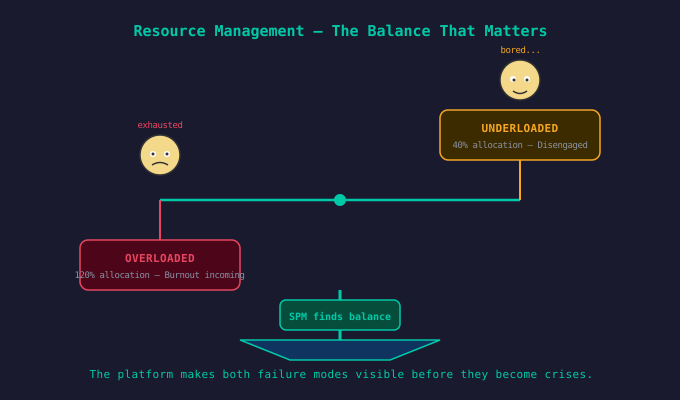
Every organization has a version of this problem. You have people. You have work. You need to match them. Sounds straightforward until you actually try to do it consistently, at scale, across multiple projects running in parallel.
The failure mode is almost always one of two things.
Overoptimization — where people are so fully allocated that there is no slack, no breathing room, no capacity to absorb the unexpected. Burnout follows. Quality drops. People leave.
Underoptimization — where people are not meaningfully stretched, where the work does not match their capabilities. Disengagement follows. Motivation drains quietly, invisibly, until one day someone hands in their notice and you realize they left long before the resignation letter arrived.
SPM makes both failure modes visible before they become crises.
Why the Pass Rate is 56%
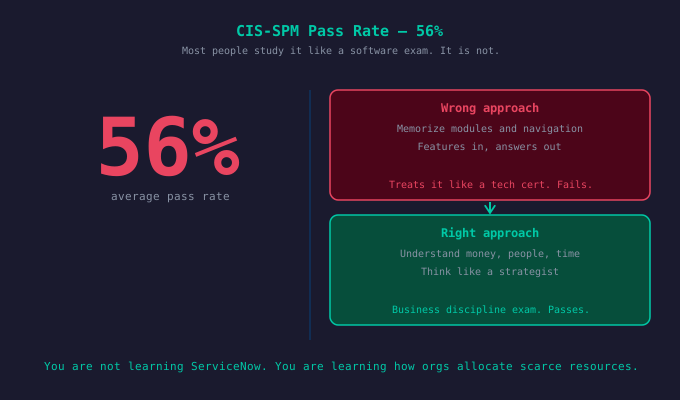
I looked this up. The average passing rate for CIS-SPM is around 56%. That is low for a professional certification.
I think I know why.
Most people study SPM like a software exam. They memorize the modules. They learn the navigation. They practice the configuration steps. They approach it the way you approach a technical certification — features in, answers out.
But SPM is not a software exam. It is a business discipline exam that happens to live on a platform.
The exam tests whether you understand money, people, and time — and how they interact when an organization is trying to do more things than it has capacity for.
The reframe that matters: you are not learning ServiceNow SPM. You are learning how to manage an organization’s most scarce resources — human capacity, financial budget, and time — and ServiceNow is the tool you happen to be using to do it.
Study it that way and the exam becomes significantly less difficult.
The Demand Intake Process
The sprint I described at the start of this article — twenty people, one week, a room full of votes — is essentially what SPM’s demand intake module formalizes.
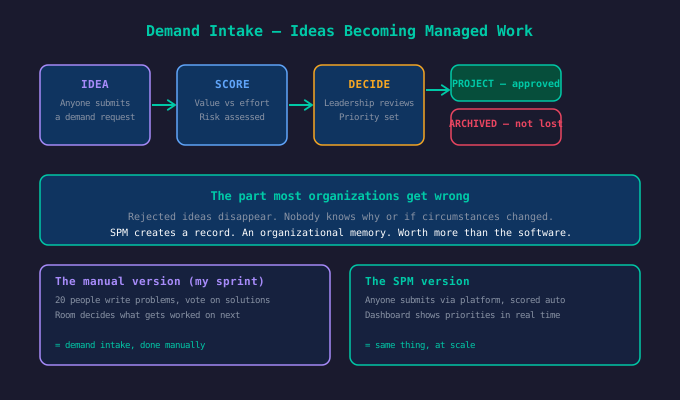
Ideas enter the system. They get evaluated against strategic priorities, resource availability, and expected value. They get compared to each other. The ones that survive become projects. The ones that do not get documented rather than forgotten.
That last part matters more than it sounds. In most organizations, rejected ideas disappear. Nobody knows why they were rejected or whether circumstances have changed enough to reconsider them. SPM creates a record. A memory. An organizational intelligence that most companies simply do not have.
Change Management is Mostly Therapy
The title of this article is not a joke.
I have been pushing people toward new technology for years. Not from a position of authority — from a position of genuine belief. I have friends I have been nudging toward AI tools for months. Not because I want them to feel behind, but because I have seen what happens when people engage with technology that automates the mundane parts of their work. They get their thinking back.
But here is what I have learned from every one of those conversations. The resistance is never really about the technology.
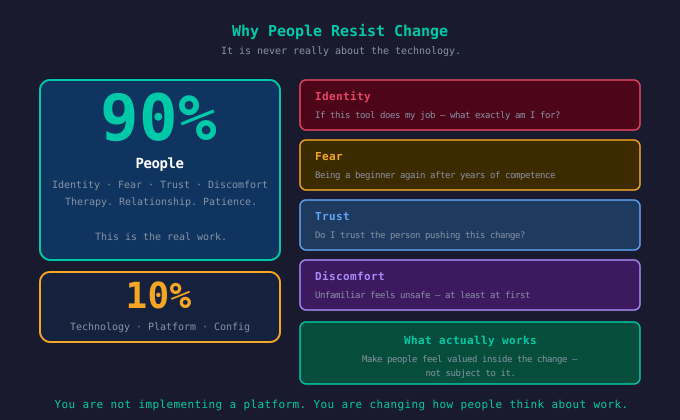
Maple Leaf Cement is one of the most interesting organizational change laboratories I have ever been inside. A company of that scale, deliberately evolving — not because it is forced to but because leadership genuinely believes it should — is a rare thing. The training happening there is constant.
What works is not the training material. What works is making people feel valued inside the change. Not like subjects of a transformation happening to them, but like participants in something being built with them.
SPM, at its best, is built on this same logic. The platform gives you the visibility. The governance gives you the structure. But the actual work — getting people to trust a new way of making decisions — that work is human. It is relational. It is therapeutic.
What Executives Actually Want to See
I have worked with enough senior stakeholders to know the gap between what they say they want and what they actually need.
They say they want data. They actually want confidence.
They say they want visibility. They actually want to stop being surprised.
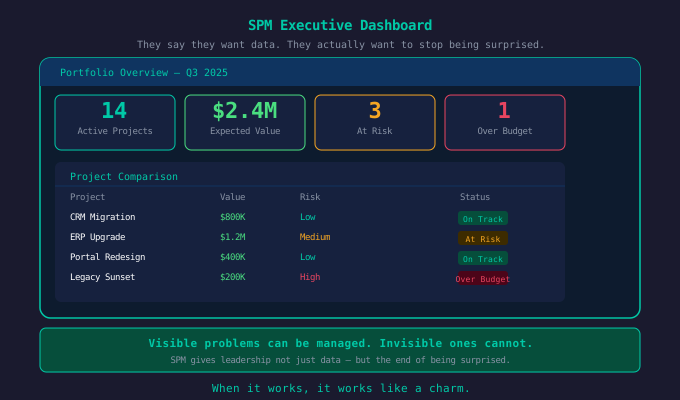
SPM’s executive dashboards and portfolio roadmaps are powerful precisely because they address the real need underneath the stated one. When a leadership team can see — in a single view — which projects are running, what they cost, what value they are expected to deliver, and how they compare to each other, something shifts. Not just informationally. Emotionally.
When it works, it works like a charm. The decisions get better. The politics get quieter. The organization starts to feel, for the first time, like it is moving in a coordinated direction.
What SPM Actually Does to You
I passed this certification and felt something I want to describe carefully.
Not transformation. Not reinvention.
Grounding.
SPM does not turn you into something else. It makes you more of what you already are — but more disciplined, more organized, more precise in how you think about the core variables that every business runs on. Money. People. Time.
I came into SPM with years in marketing, sales, and stakeholder management. I left it with a formal framework for what I had been doing intuitively — understanding what people need, building the conditions for them to trust a new direction, and making the invisible visible so that better decisions become possible.
The 90% is not a criticism of technology. It is a reminder of where the real leverage lives.
Next: IRM — why governance is the most underrated discipline in any organization, and why I have apparently become the person who finds it genuinely exciting.